
New York Public News Network | By Samuel King
New York’s smaller and rural hospitals are facing steep cuts as consolidations sweep through the healthcare industry — and the leading candidates for governor are trading blame for the trend.
The latest flashpoint is in the Hudson Valley, where the Albany Med Health system has filed a plan to curtail services at Columbia Memorial Health in Hudson. Critics say patients in Columbia and Greene counties will now need to drive about an hour north to Albany to receive services that were once in their backyard.
Industry executives say that a Republican-backed bill that changed rules for the Medicaid program has accelerated a wave of healthcare closures and consolidations in major cities.
Democratic Gov. Kathy Hochul and her Republican challenger, Bruce Blakeman, have different plans to address rural health care.
Hochul has pushed for state funding to grapple what she says is a federal shortfall. Blakeman, who serves as Nassau County executive on Long Island, said he would look to root out fraud and make targeted investments.
A recent Quinnipiac University poll found healthcare was the top issue for 11% of voters in Upstate New York, trailing just the economy and cost of living.
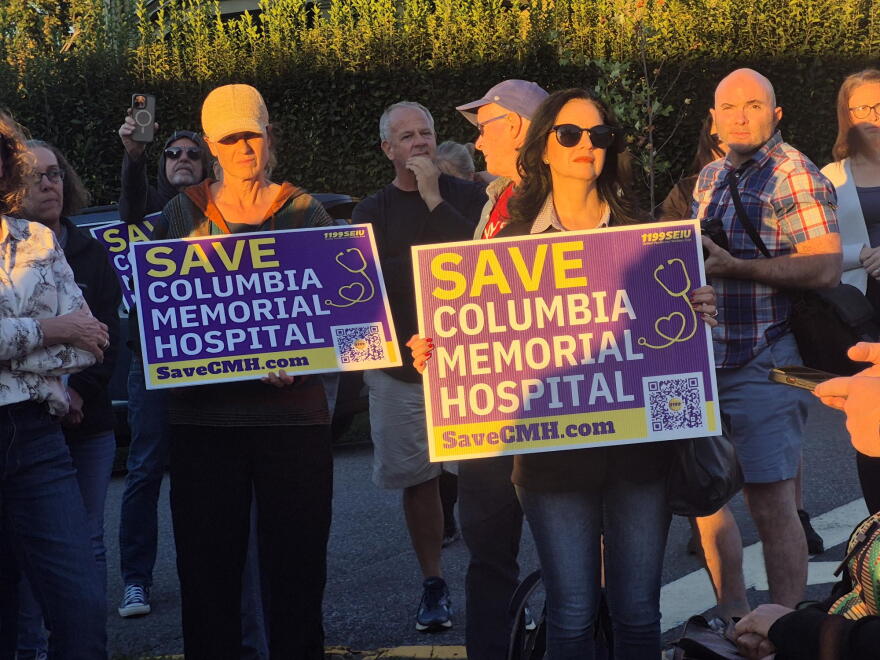
In Hudson, the proposed elimination of services of Albany Med sparked protests.
“I utilize this hospital daily. … All my patients go here,” said Sarah Rebekah Garber, a nurse practitioner in the area. “Many of them are elderly, cannot make the drive up to Albany, cannot make the drive down to Kingston, and they’re just going to forgo care.”
Garber is one of the hundreds of residents and medical professionals who have joined the Save CMH Coalition to push back against the planned changes.
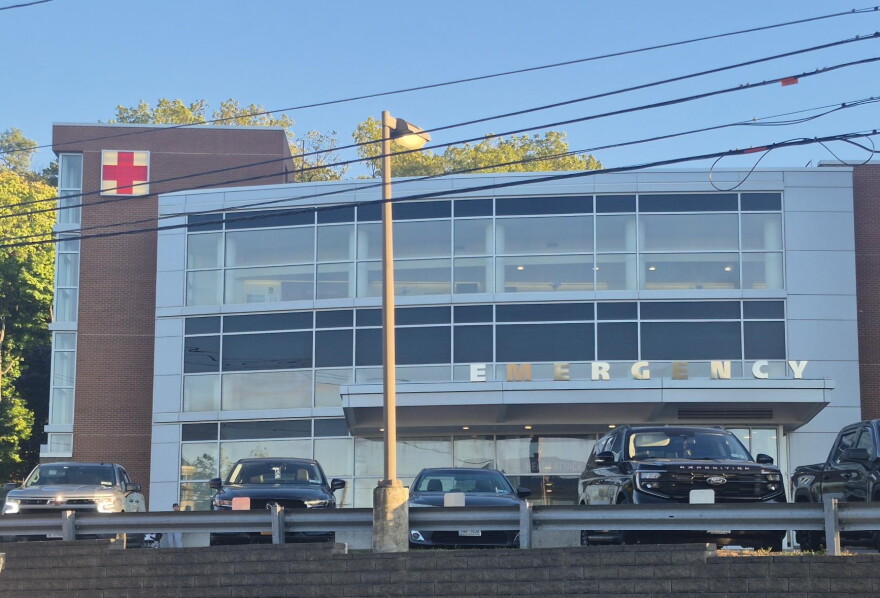
Albany Med, which has its flagship teaching hospital about a mile from the state Capitol, says Columbia Memorial isn’t making use of the 70 beds for which it’s staffed.
The health system has filed a plan with the state that would convert the hospital into what’s known as a critical access hospital. The federal designation is designed to help keep hospitals open in rural areas. It would make the hospital eligible for far more federal funding, even though it means fewer beds. Hospitals are limited to 25 beds and patients can only stay in the hospital for four days on average.
The health chain also plans to expand a clinic in Greene County.
The hospital is promising to retain all the services it currently provides, while freeing up investment in new and enhanced services, according to an Albany Med Health System spokesperson.
Hospital systems are facing added financial challenges after Congress passed H.R. 1 or President Donald Trump’s “One Big Beautiful Bill Act” last year, according to the Iroquois Healthcare Association, which represents dozens of hospitals and health systems in Upstate New York.
The bill let health insurance subsidies lapse and expanded Medicaid restrictions, which led to more people being uninsured. That meant lower payments to hospitals, which continue to deal with higher costs themselves and are looking for more help from the state, according to Iroquois CEO Kevin Kerwin.
“Our members by and large are fighting to get to a 0% margin, and … we’re in a fragile state when it comes to hospital finances,” Kerwin said. “Costs continue to escalate, whether we’re talking about supply chain issues … labor costs continue to increase.”
The changes brought by H.R. 1 mean less money is flowing to the states as well, including New York. Estimates find the state would lose up to $10 billion annually. Health care spending makes up just over a quarter of the state’s operating budget.
Hochul traveled in August to Chautauqua County, where she touted state funding for a hospital project in Fredonia while criticizing the Trump administration.
“We’re finding that Washington has been basically defunding our hospitals,” Hochul said. “Why do I know this? Because about a year ago, we found out that New York state would receive about $10 billion less in healthcare dollars, and have to figure it out on our own.”
Hochul has pushed a $500 million fund to help distressed hospitals in the state, which was included in this year’s budget.
Blakeman said he will invest in rural health care but that the state should focus on what he claims is billions in health care fraud mostly in the Medicaid program.
“Look, I want to enhance the care of people who need it, whether it be in Medicaid or any of the other programs that the state has, and I want the services to be first-class and quality services,” Blakeman told reporters in August. “But people are complaining that it’s too expensive and the services are terrible, so obviously there’s a fundamental problem there.”
Former CMH board member and communications consultant Bill Van Slyke has been keeping a close eye on the situation in Hudson. He said the current healthcare system is trying to address competing priorities: maintaining cash flow for providers and other related industries while meeting customers’ demand for care at low costs.
“As we fund it today, and all of the pressure on both state and federal taxpayers who are funding this, it’s impossible for us to sustain a healthcare system that generates all those profits for all of those interests, and at the same time meets the community’s need,” Van Slyke said. “Something has to give.”
Albany Med’s application to the Department of Health is still pending.
Members of the Save CMH Coalition worry that if the application is approved, the impact will fall on patients and put critical healthcare out of reach. The coalition organized rallies outside the hospital in mid-July and again in September.
CMS nurse Sara Dragula said she’s worried that the emergency room where she works would become even more crowded under the plan. The hospital typically has 30 to 50 admitted patients at any one time, according to hospital documents. But under the plan only 25 beds would be available.
“They’re kind of saying that like, ‘Oh, we’re trying to invest for the future by right-sizing it,’ but we’re challenging that. You know, as an ER nurse, I have periods of time where we have patients that are staying in the ED and not even getting upstairs because the beds are so full upstairs,” she said.
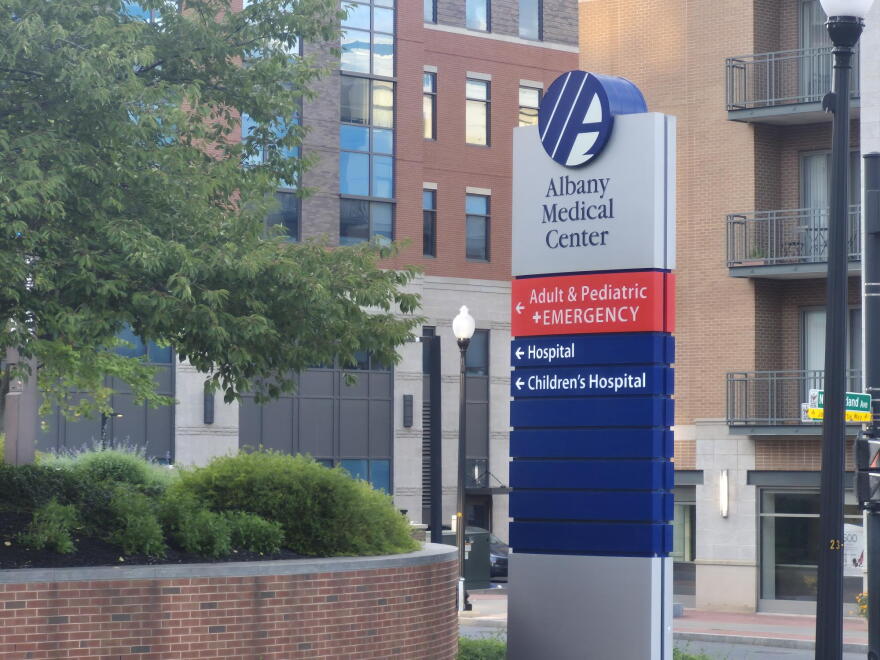
Those concerns spread to Albany, too. Albany Med is already embarking on an expansion of its emergency department at its flagship hospital as the number of transfers from facilities across the region has increased steadily since 2020.
Close to 2,900 patients were transferred from Columbia Memorial Hospital to Albany Med alone between 2020 and the summer of 2025.
Assemblymember Josh Jensen of Monroe County, the lead Republican on the Assembly’s health committee, agrees the changes brought by H.R. 1 will be challenging for hospitals. But he points to millions in funding for rural healthcare that are part of the new law as well.
New York stands to receive more than $200 million as part of the Rural Health Transportation Program, which is also part of H.R. 1. But that only goes so far. CMH’s budget alone tops $150 million.
Jensen also said it’s not necessarily the case that consolidation in healthcare is bad for patients in rural areas because they would still have access to high-quality care.
“I look at that as a really good thing because it means there’s enhanced capacity,” he said. “So, if for some reason that you’re not able to keep a practice open or something, that there is a backstop so that an entire community doesn’t go and have to travel an hour-and-a-half. There is something within the health system to allow for that continuity of care.”
So far, that’s doing little to ease the concerns of patients, providers and potential voters like Garber, who isn’t convinced about the plans for CMH.
“Our country needs to make an investment in rural healthcare,” Garber said. “These people matter. These communities matter.”
Jimmy Vielkind and Sam Dingman contributed reporting.